When talking about EMS there are a few things that come to mind. The first is inevitably the VCS3 synthesizer—as well as its British pioneer Peter Zinovieff and the fact that a garden shed in Putney, London was an odd place to start a synthesizer revolution. Then you'd probably move on to the Synthi A or Synthi AKS, which were briefcase-style synthesizers that still have a certain something about them that fascinates us today. However, you are unlikely to land on the Synthi-E as a topic of conversation because, well, frankly, whoever heard of such a thing?
EMS (Electronic Music Studios Ltd) was, by all accounts, a weird company set up to fund the development of Peter's experimental computer music system and other flights of synthesis fancy. He had collaborated with BBC Radiophonic Workshop luminaries Delia Derbyshire, Brian Hodgson and Tristram Cary to produce and promote electronic music in the late 1960s. When he initially advertised for funding in 1969, he got a single response and £50 from a person called Don Banks, who thought they had bought a synthesizer. Inspired by the cash Peter pulled together David Cockerell and Tristram Cary to form EMS and see if there was any money in making synths.
Perspective: a Brief History of EMS Instruments
Together, they developed the design into the Voltage Controlled Studio No. 3, known as the VCS3 or simply "The Putney". This was a year before the arrival of the Minimoog, and it was an absolute revelation. Most synthesizers at the time were huge, unwieldy modular systems, and so David's design felt a little underwhelming, but it had the potential of being smaller, portable and more affordable.
×
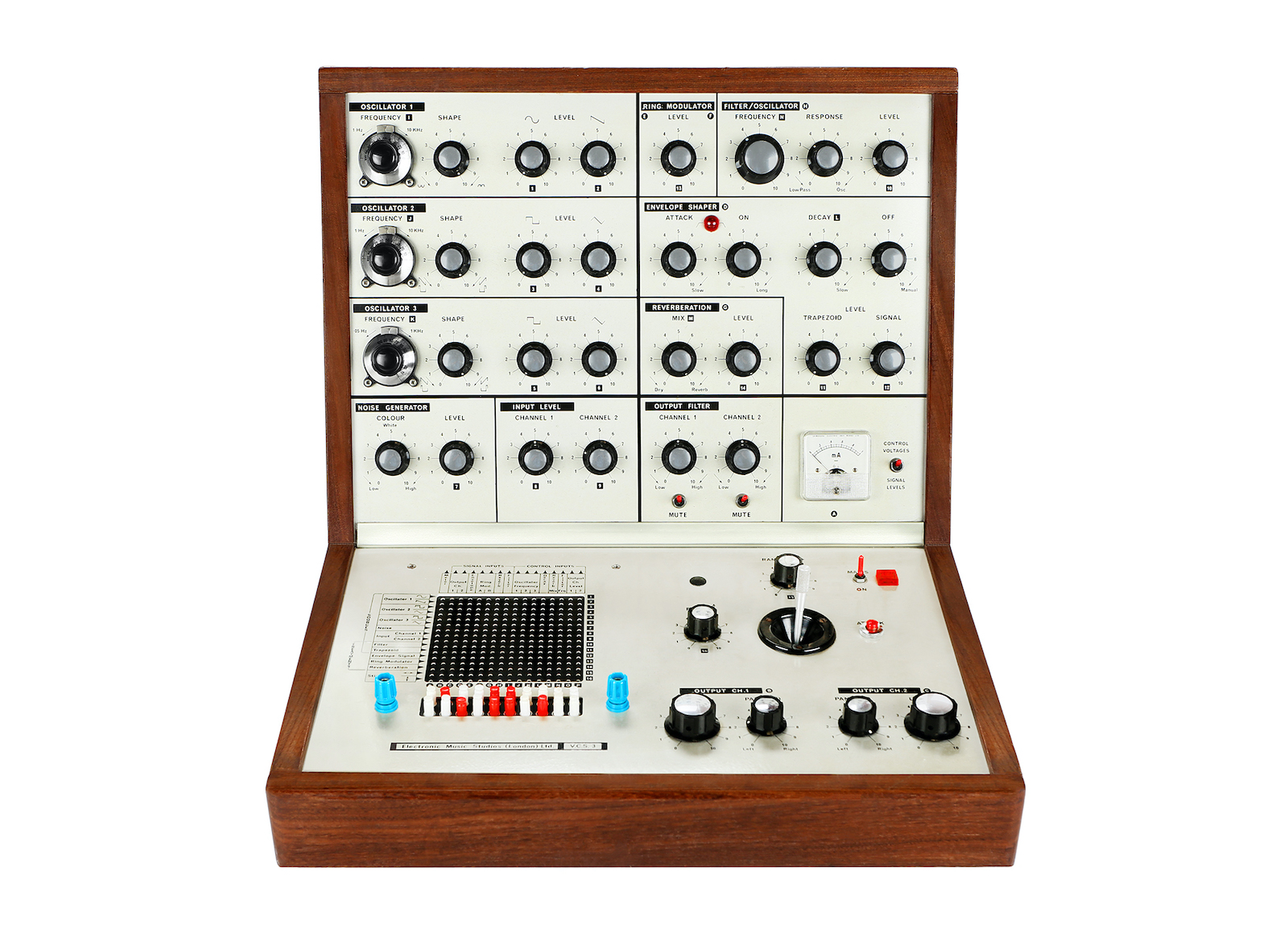
The VCS3 was essentially a modular synthesizer in a scaled-down, desktop-sized cabinet. It had two primary oscillators with two waveforms, and a third oscillator used for modulation. The filter was unusual, with sort of a 12dB slope moving to an 18dB slope at higher frequencies, some serious bass drop with resonance and a penchant for self-oscillation. It also had a weird trapezoid envelope, built-in speakers, amplified inputs and a whacking great big joystick for controlling the pitch. To make connections it used a pin matrix that allowed you to connect the various elements of the synth together without the use of patch cables. These things are perhaps strange to our enlightened 21st century eyes, whereas at the time, it was exciting and unprecedented.
The VCS3 was not a particularly "musical" instrument, in conventional senses of the word. There was no keyboard, the tuning was finicky, and the matrix wasn't buffered, so that every time you add a pin the voltage changed on everything else as well. This was largely because it came from a Radiophonic-influenced arm of experimental electronic sound generation. It wasn't really imagined as a device to write melody—instead, it was a studio of special effects, whizzes, bleeps and experimental sounds. All that being said the VCS3 was a remarkable machine, and although probably no more than 800 were ever made, it put EMS on the map and spawned a number of developments and deviations that take us along the road to the Synthi E.
×
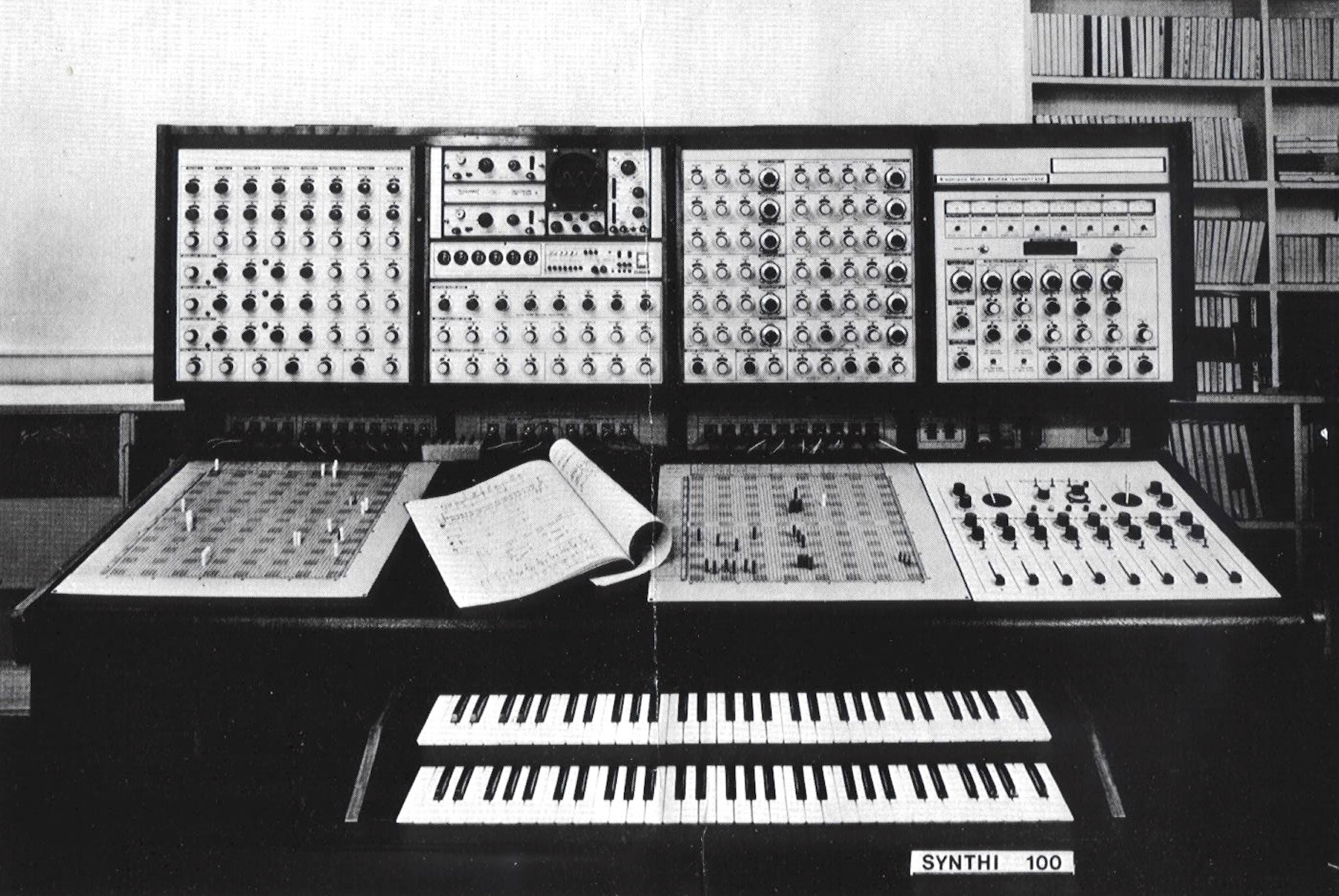
But first, we must go on a massive side-quest into the Synthi 100. It's a huge, studio-sized synthesizer that pulls technology from the VCS3 and reseats it into a large assortment of oscillators, filters, envelopes, an oscilloscope, a six-track 256-step digital sequencer, and more—indeed, aiming to act as a consolidated electronic music synthesis studio. They probably made around 30, and one of them ended up back at the Radiophonic workshop. (As an aside, It's great to see Analogue Solutions celebrating the concept and exploring similar formats today with their Colossus synthesizer series.)
While the VCS3 and Synthi 100 got EMS noticed, it wasn't until the arrival of the Synthi A and AKS that things really took off. The Synthi A took all of the VCS3 and squeezed it into a Spartanite attaché case. The AKS added what most people claim is an almost unplayable membrane keyboard into the lid, along with the arguably more useful sequencer. It was portable, cheap, looked amazing and was super-desirable even though both Moog and ARP had caught up with the Minimoog and ARP 2600. This marked the peak of EMS's success and did wonders to power Peter Zinovieff's experimental laboratory of digital research, where magnificent things were developed that were never likely to be commercially viable.
After the relative commercial failure of his Synthi Hi-Fli guitar synthesizer, David Cockerell left EMS to join Electro-Harmonix in 1972. This provided space for a young engineer called Tim Orr to develop his own ideas from the VCS3 technology. It was this opportunity that brought us the Synthi E in 1975.
The Synthi E
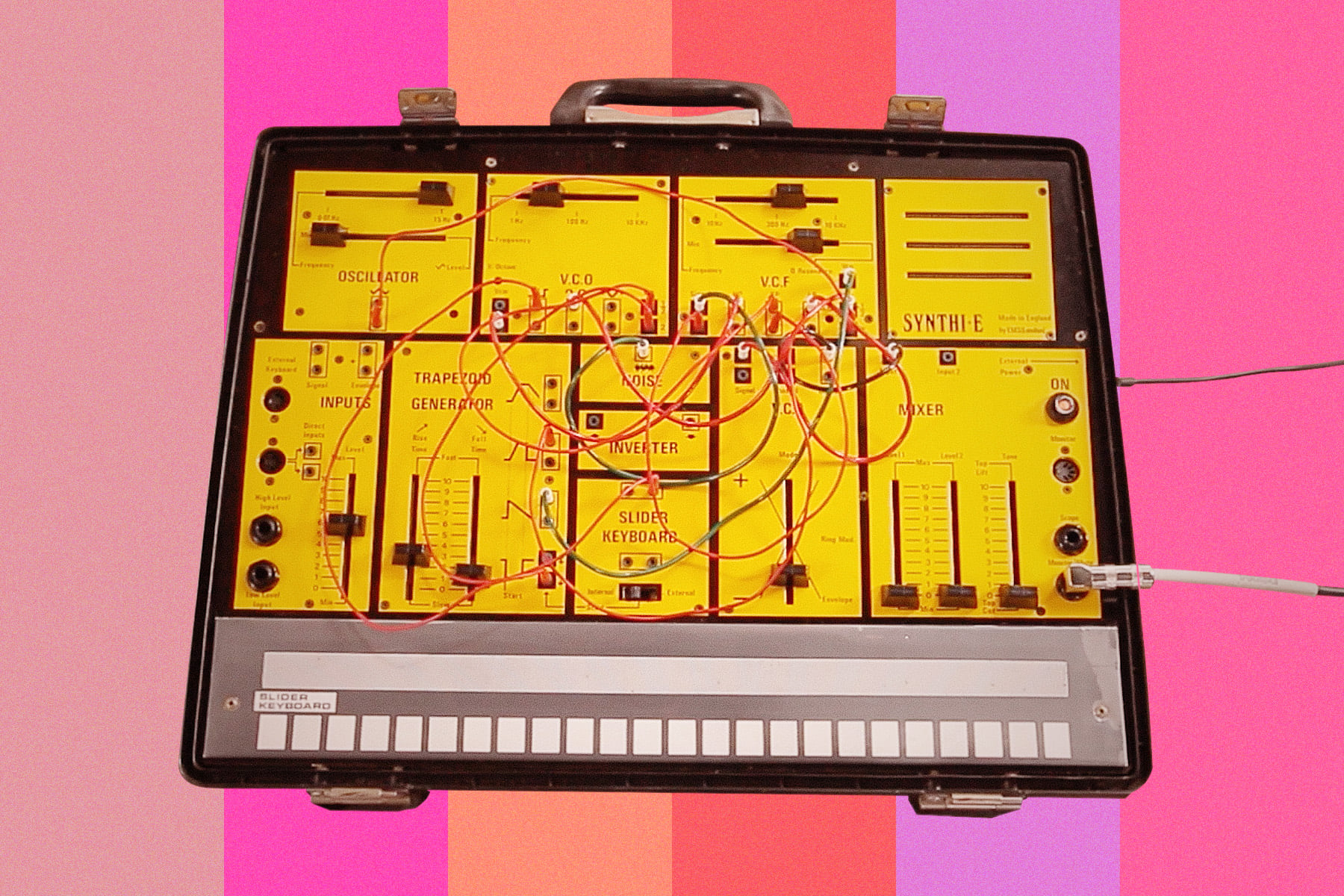
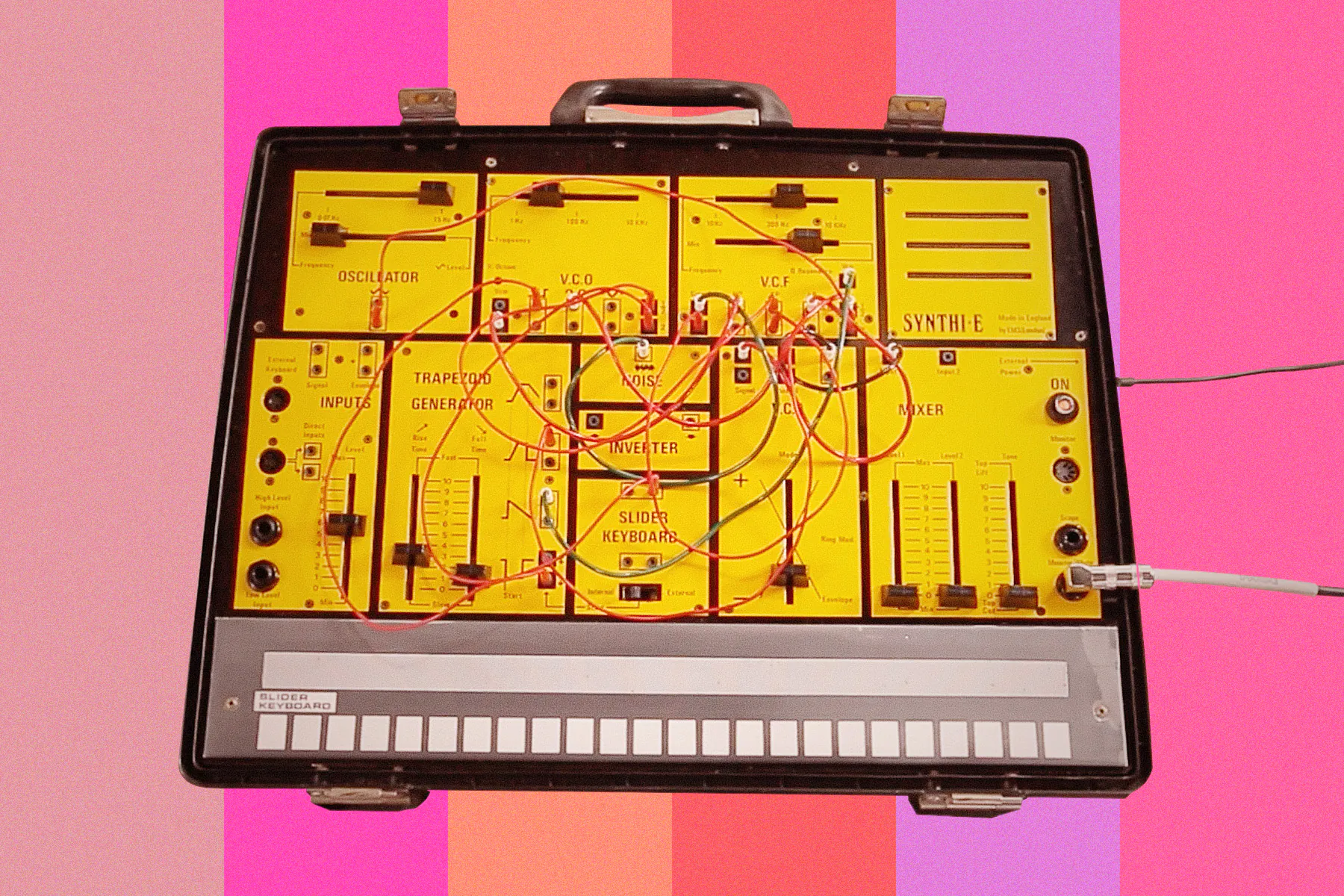
The Synthi E was a modified and simplified VCS3 built into the briefcase of the Synthi A, and could be powered by battery. The biggest change was the removal of the complex and costly pin matrix to be replaced with good old-fashioned patch sockets and cables. Buoyed by the academic interest in the Synth A by colleges and universities, the Synth E was built with education in mind: Hence the "E". It came with a complete teaching course to cover its use in conveying sound synthesis and electronic music to physics students.
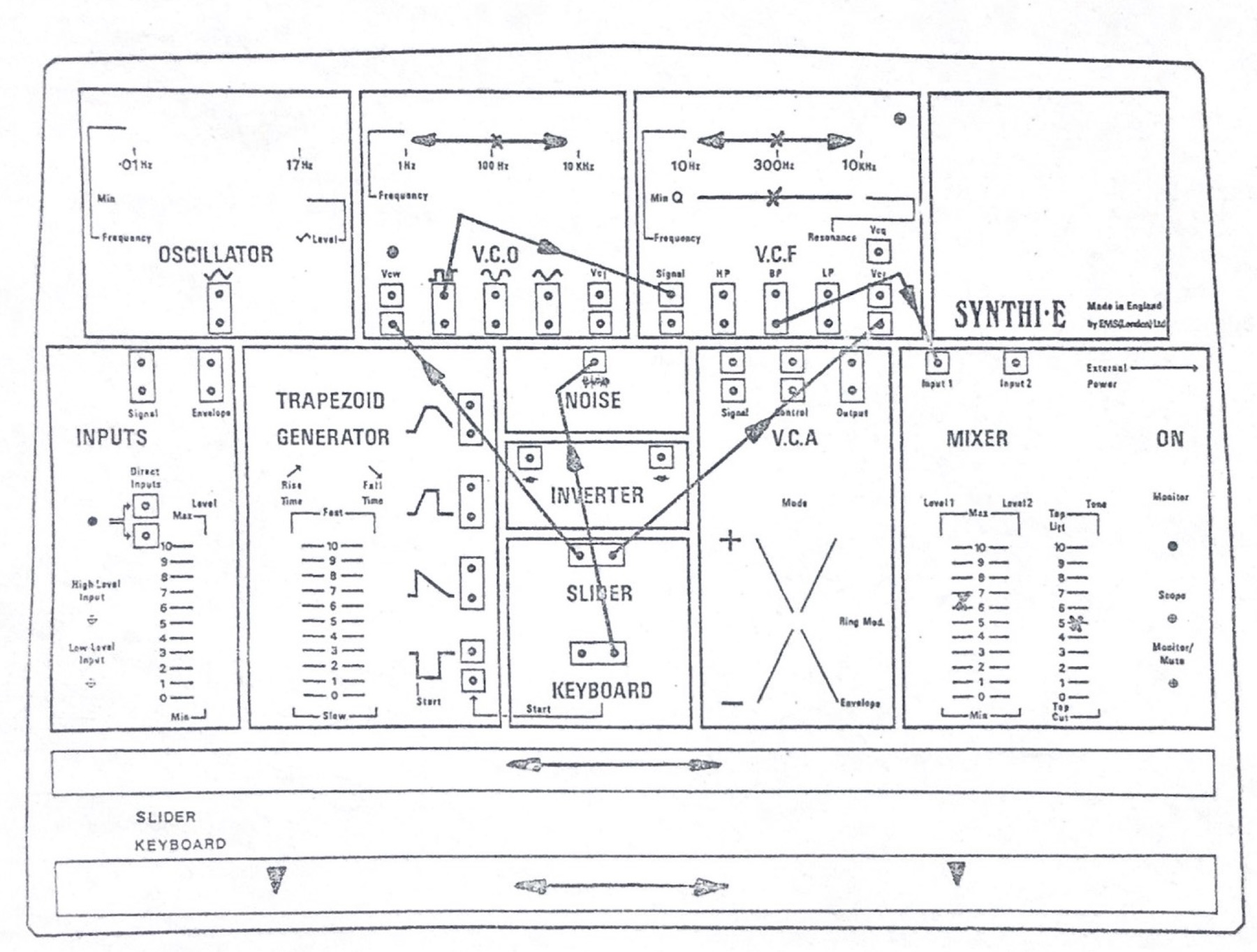
The architecture was straightforward. At the top left you had a modulation oscillator with triangle wave outputs. Then you had the main VCO, which now has triangle, sine and pulse wave outputs. The filter had low, high, and bandpass modes, all of which were available simultaneously, and you had a permanent output for the self-oscillating sine wave. Top right was a built-in speaker making the Synth E very self-contained. At the bottom left you have the input section for microphone and line level inputs. This was a vital component that turned the Synthi into an effects machine and also let you pull envelopes from incoming signals. Next, the now familiar trapezoid envelope gave you control over the rise and fall, leaving the Hold time to be set by the keyboard, or you could let the function spin as another LFO. In the middle we have a noise generator, a signal inverter, glide and a connection for an external keyboard. The VCA included a ring modulator, and finally we had a two-channel mixer with a tone control.
Along the bottom ran a pair of manual-slide tape controllers. The top one was essentially a ribbon controller, whereas the bottom one was stepped and calibrated to produce notes. A mechanical three octave keyboard called the DKE could be plugged in to give it a solid musical framework.
Nowadays we'd this sort of workflow as a bass or lead synthesizer voice, but at the time it was designed as a place to explore sound and the effects of voltage control. It would teach the user about signal routing, the difference between pitch oscillations and modulation oscillations, and how a filter carves away at different waveforms. The external input meant that it would drop into an existing setup and let you run tape loops, other synths and guitars through it. The keyboard lent itself to melody, more so than the VCS3, but the ribbon kept the option open for a less constricted approach.
×
The sound is largely defined by the interaction between the three oscillators, by which I mean the LFO, the VCO and the sine wave output of the filter. It's the familiar sound of analog synthesis but one without the safety net of quantization or musical intervals. The filter is fierce as you push the resonance, and all three modes are available for mixing or switching. The weird VCA/Ring Mod combo offers a lot of dissonance and sci-fi movie explorations as the trapezoid generator pushes shapes and cycles through various other aspects. You get the sense that you're not really going to be finding any tunes, but will probably discover new worlds of sonic strangeness. If you consider other synths of the time like the ARP 2600, they were often deliberately about much more than melody.
The Synthi E was a versatile and robust idea. It doesn't suffer from the same level of complexity as the VCS3 or Synthi A, and so was perfect for the educational environment, capable of producing some really interesting sounds, both musical and otherwise. I'm immediately reminded of the Erica Synths Bullfrog synthesizer that, while it doesn't look remotely similar, has a similar educational intention.
As EMS Continued
There was a little-known variation on the Synthi E called the Synthi Logik. It was designed by Orr but built exclusively in Germany at the German distributor EMS Rehberg. It had a few improvements, including a more traditional ADSR envelope, portamento and a mechanical keyboard.
Orr went on to design an impressive vocoder, a quadraphonic effects processor and Universal Sequencer, but none of it was enough to prevent EMS' slide into bankruptcy in 1979. What was needed amongst the rise of the Yamaha CS-80, Moog Polymoog and Sequential Prophet-5 was a nice EMS polysynth. Though they never lacked the innovation or technology, designer Graham Hinton took the paraphonic route of using divide-down oscillators through a single filter and envelope for the PolySynthi. This approach had already been surpassed and left behind and so didn’t ignite the imagination of customers. Only a handful were ever built, and EMS struggled to pay the bills.
During this time Peter and David had built the most extraordinary EMS Studio filled with futuristic ideas involving hybrid analog and digital workflows, years ahead of its time. They invented samplers, light pens, squishy controllers, digital sequencers and massive oscillator banks. When the company went bust, it was all sold to the National Theatre and put in storage in the basement, where it was sadly destroyed in a flood.
I've often marvelled at how these incredibly innovative synth companies like Sequential, Moog, ARP, Fairlight, Oberheim and so on, along with EMS, are all so short-lived. There must be something in creative engineering that blossoms very quickly, captures a musician's imagination, and then finds itself unsustainable. Maybe it's the lack of sales and marketing acumen, maybe it's the expensive explorations into the next new thing, or the inability to remain focused on the boring bits about running a business, because it's certainly not about the lack of talent or vision.
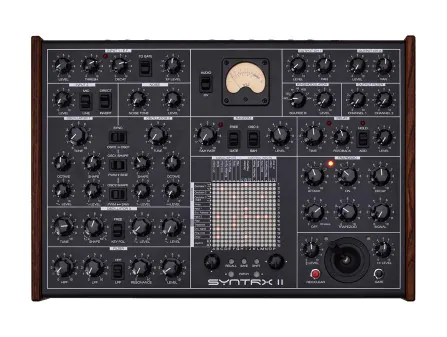
Eventually, in 1995, the EMS name ended up back with a previous employee called Robin Wood. He's been hand-building VCS3s and Synthi A's ever since, and there's a very long waiting list that you can join. Alternatively, Arturia's Synthi V is a superb virtual version of the Synthi A, and we are also waiting on the Behringer VCS3 clone that was first seen in 2021. The Syntrx II from Erica Synths is a brilliant homage to the Synthi A, or for something officially licensed by EMS, Soundfreak has broken the VCS3 into 4U format modules. The influence of this funny little synth made in a shed in Putney lives on.





The information below is required for social login
Sign In
Create New Account