By the late '90s, desktop music production stations were already a hit with professional and amateur music makers. These electronic tools gained rapid popularity a decade earlier when Akai released their first MPC unit. BOSS/Roland followed with the SP series 10 years after that, and the race was on.
But there was another company that got into the game, even if they were a little late to the party—Korg, with the Electribe.
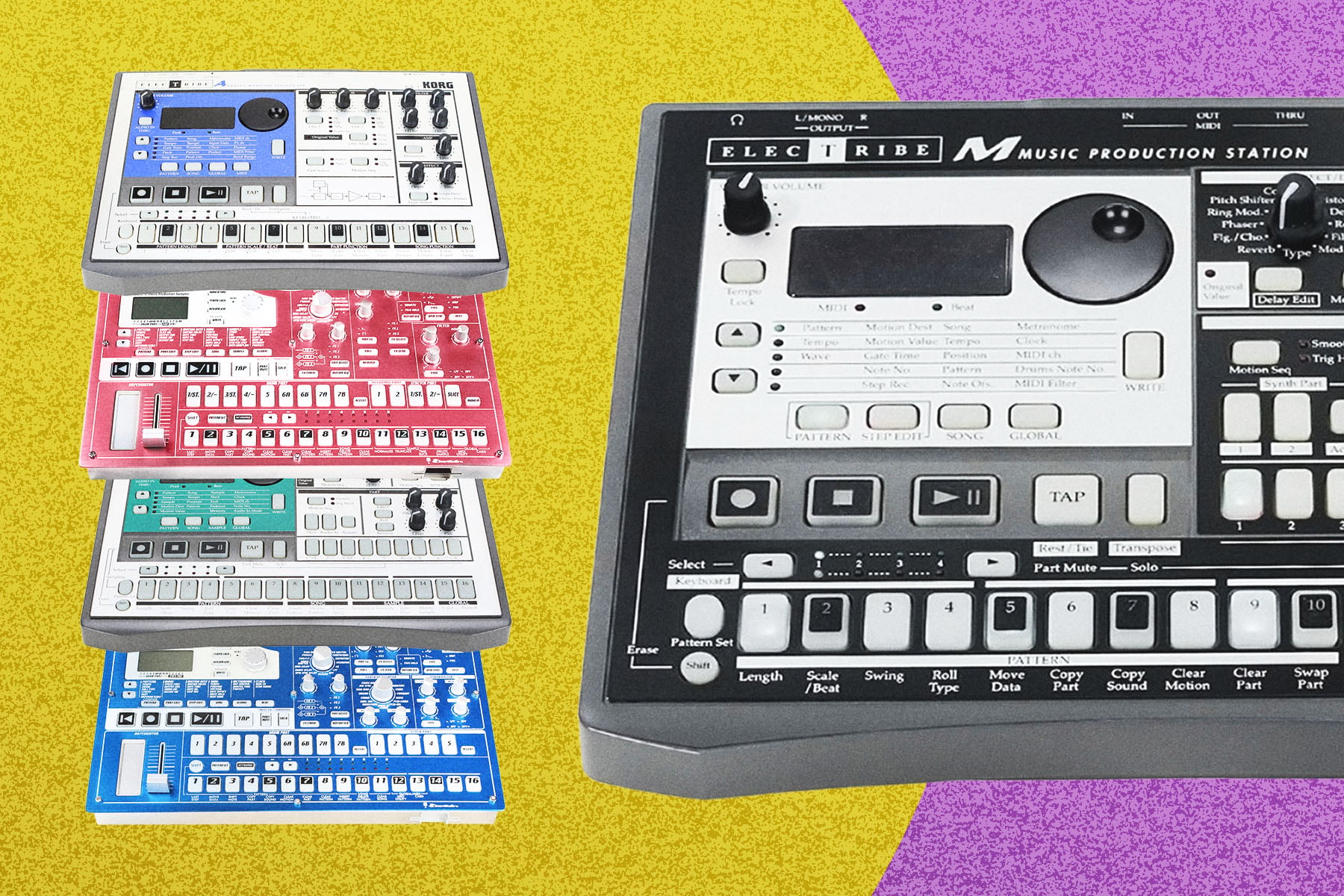
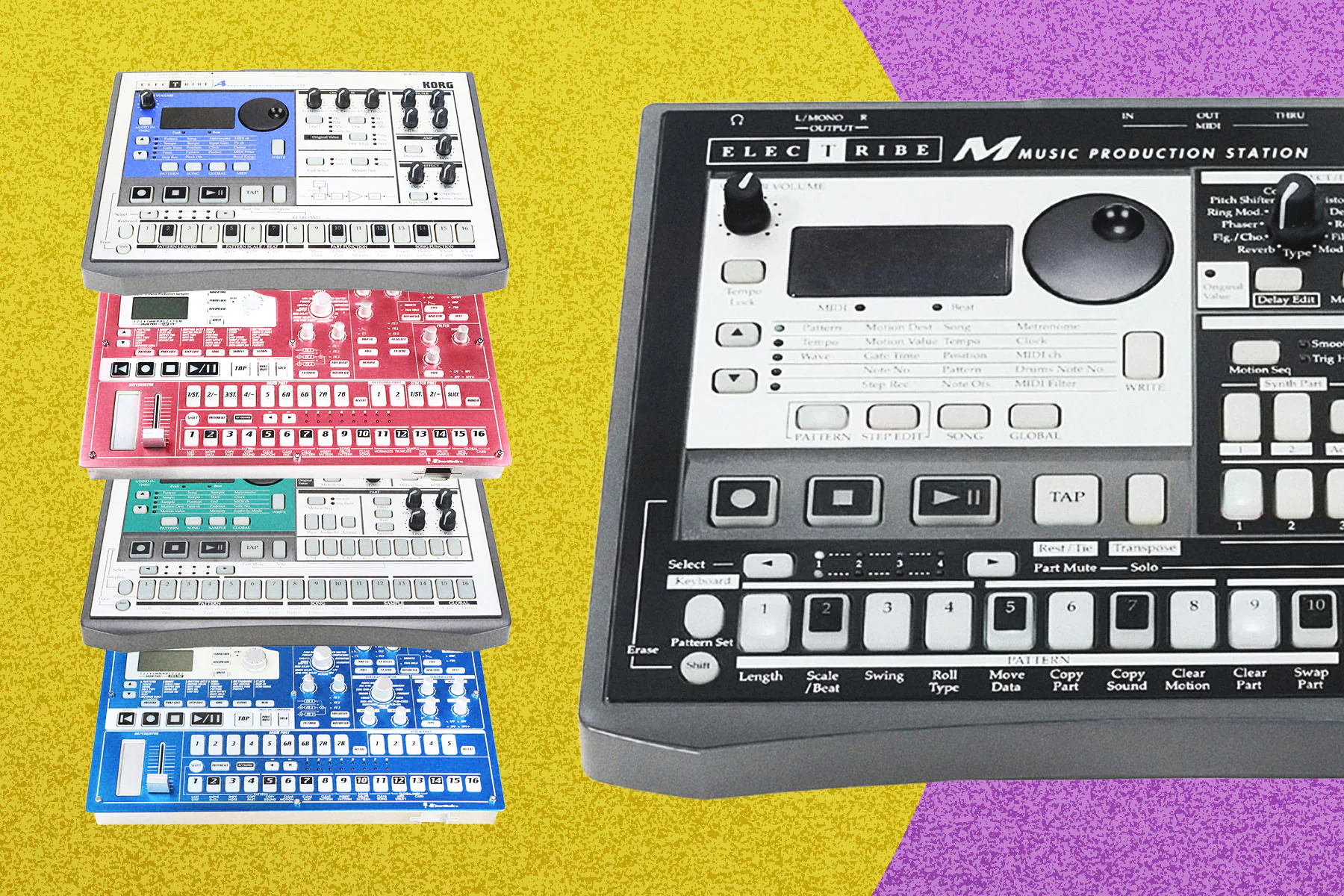
Designed as a musical instrument that marries ease of use with professional, analog-style sounds and sequencing capabilities that let you create entire productions, the Electribe line has been a long-standing choice for all types of electronic music styles. They’re called “grooveboxes” for a reason, with a design based on thick, vibey analog sounds and rich editing features that let you create any type of beat. The line comes in a variety of different programmable analog modeling synths and drum machines that each offer something a little different while sticking with the reason people started using them in the first place.
In fact, Korg had an interesting go-to-market strategy for the first Electribe model that was released just before the turn of the millennium. It included a CD invitation in Entertainment Weekly magazine claiming it to be "one of the best party invitations of the year."
Party like it’s 1999, indeed.
Music Production and the New Millennium
Around the turn of the millennium, music production workflows were at a unique crossroads. It was clear that digital audio workstations were the way of the future, but there was still a lot of value and market interest in hardware music creation tools. Companies like Akai and Roland blazed the trail for all-in-one music production stations, but Korg took the idea in a different direction. When they released the first Electribe, music production workflows might have been as varied as they’ve ever been. This included a unique mix of hardware and software tools, sampling techniques, and sequencing all based on authentic, real-time performance.
Music on hardware like the Electribe is composed in sequence and pattern-based methods. The Electribe put an emphasis on features that made it easy to create and edit music on the fly, with dynamics and spontaneity being the name of the game. The technique of sampling was still in heavy use—a proven workflow from the '80s that retained its value even as music technology was evolving. The Electribe didn’t just rely on built-in sampled sounds though, it promoted users to import their own samples.
Remember, making music on computers hadn’t caught up with the technology yet, so there was still a healthy market for hardware music creation tools. Hardware instruments were still in vogue—be they secondhand analog finds or new digital devices.
The tactile feel of these instruments appeals to a lot of users, especially those that prefer a more “live” style of composition. The Electribe series combines the best of the analog and digital worlds into a line of music making tools that are as user friendly as they are portable.
Electribe Timeline
The Electribe line has seen a lot of different versions over the years. They’ve always walked the line between synths and drum machines. Some focus on one or the other, and some are a hybrid of both. Music production stations like the Electribe are designed for users who want an all-in-one solution to creating without the hassle of needing to implement additional gear. To be able to make and record music on the same device and then edit it from there presents a lot of benefits.
And it came at an interesting time in music technology. Analog sounds were still popular, but music creators were excited at the possibilities that digital audio promised. In the early days, DAWs weren't as common as they are today. They required a powerful computer to run them and a significant hardware investment at a cost that a lot of people couldn’t justify. For creators looking to make electronic music, the Electribe combined everything needed to bring their compositions to life in a convenient, user-friendly unit.
The Electribe's lifespan has seen several twists and turns, from the analog Monotribe to modern plugins—but let’s take a high-level look at some of the earliest and most interesting members of the Electribe family.
EA1 Analog Modeling Synthesizer
×
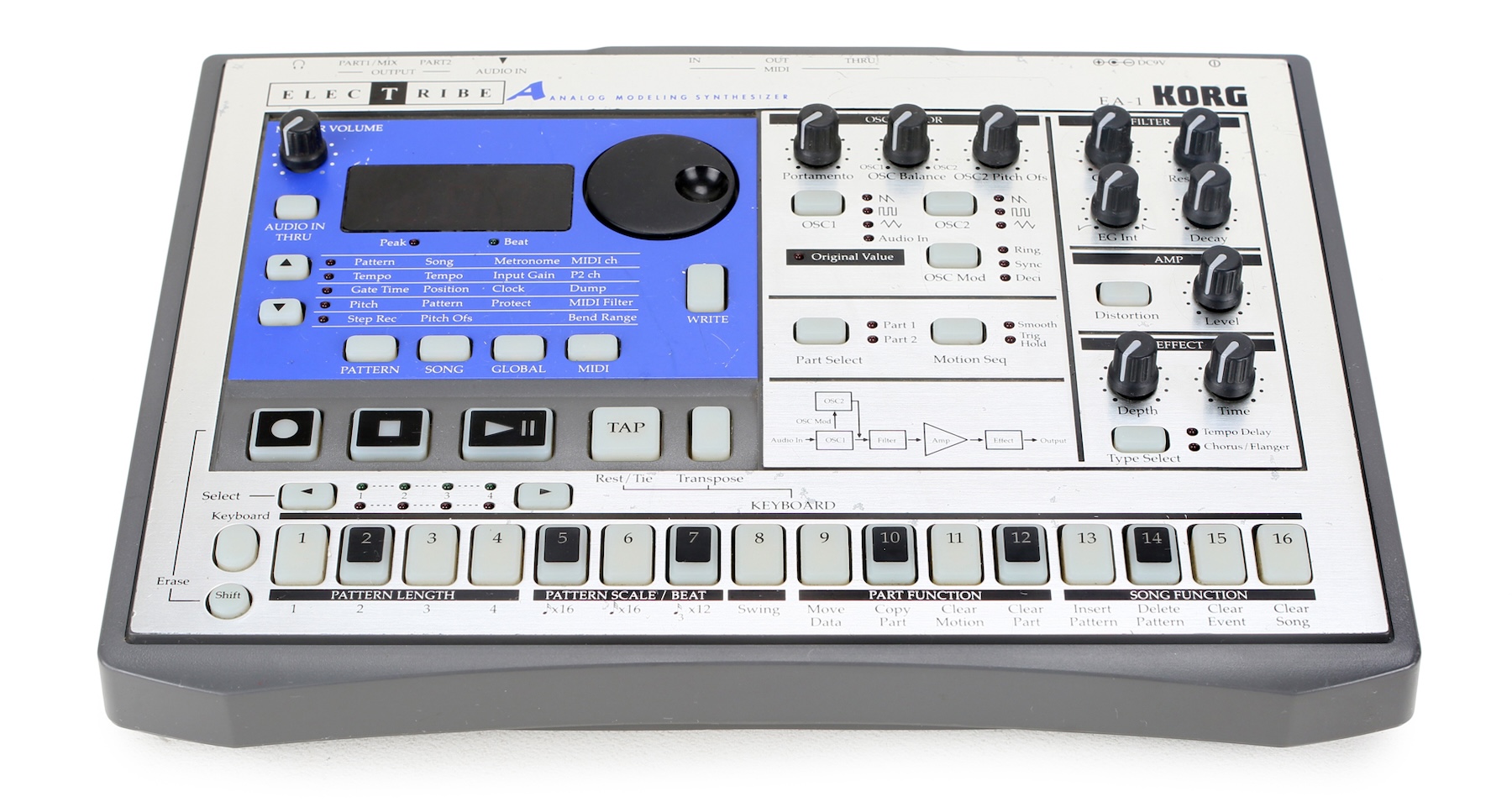
The first in the Electribe line is 1999’s EA1 Analog Modeling Synthesizer. It made it easy for producers to create analog synthesizer, bass, and sound effects in an interface that took cues from the workflow of hardware analog synths.
It was intended to be as simple to create sounds as possible, and once dialed in they could be routed to the internal sequencer to create loops and phrases. Additional controls let you adjust dynamics, add filtering, and effect the sounds how you’d like all while recording them to the sequencer.
The EA1 could also be triggered by external hardware to function as an analog sound generator. This might not seem that impressive today, but in 1999 this was new sonic territory.
ER1 Rhythm Synthesizer
×
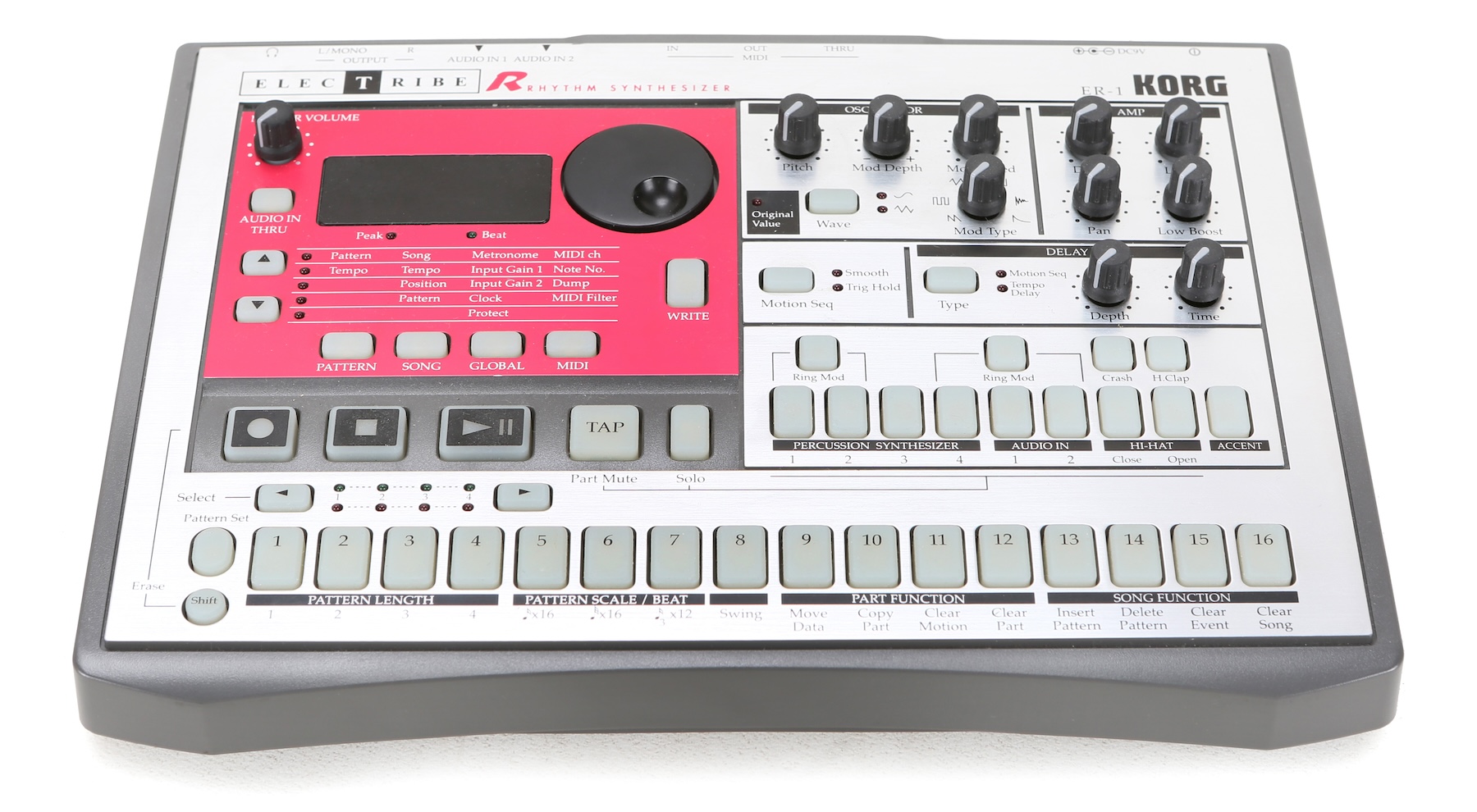
Also coming to market in 1999 was the ER1. It focused on percussion sounds, and many used it to create beats with its analog sound library. The interface resembles the sequencers we know today. Its wealth of control features allowed users to sculpt their beats in real time and record them to the internal sequencer.
Sixteen illuminated pad keys allowed for different rhythm variations, and you could play beats on the fly with the 12 trigger pads. Korg designed the ER1 to be as versatile as the music creators that used it, and with it they created a groove box that was ahead of its time.
ES1 Rhythm Production Sampler
×
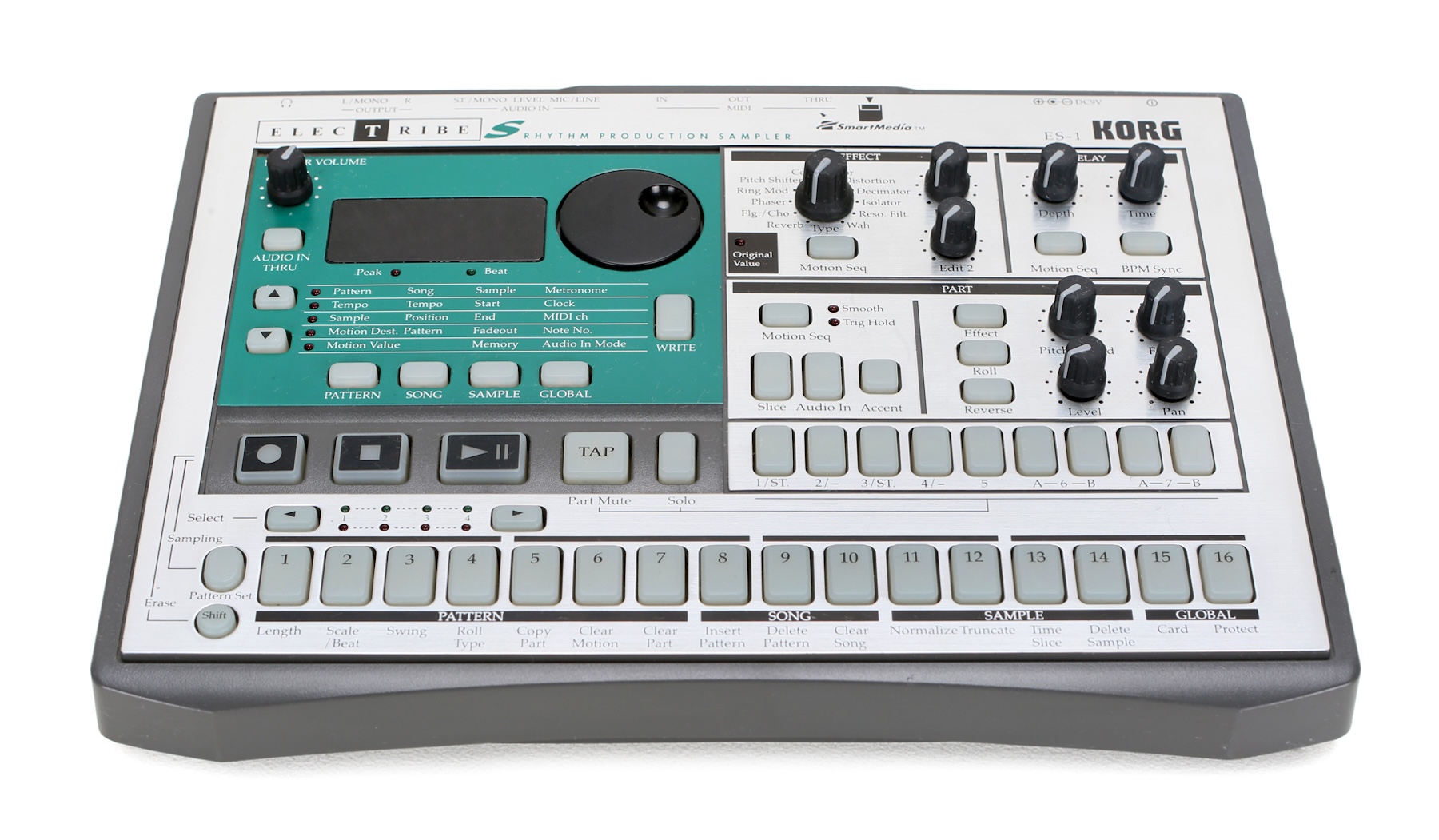
Almost identical in layout to ER1 is the ES1. It offered a focus on sampling with the options to warp, bend, and effect the samples however a user’s creativity dictated. Think of it like a sampler with the control set of a synthesizer.
This was the first Electribe model to sport onboard effects, and it could sample up to 95 seconds. It introduced the Time Slice function that allowed sequences to conform to specific tempos. For the first time you could store data on removable media or import custom samples.
It’s one of the most popular samplers of all time, used by artists ranging from Nine Inch Nails to The Prodigy.
EM1 Music Station
×
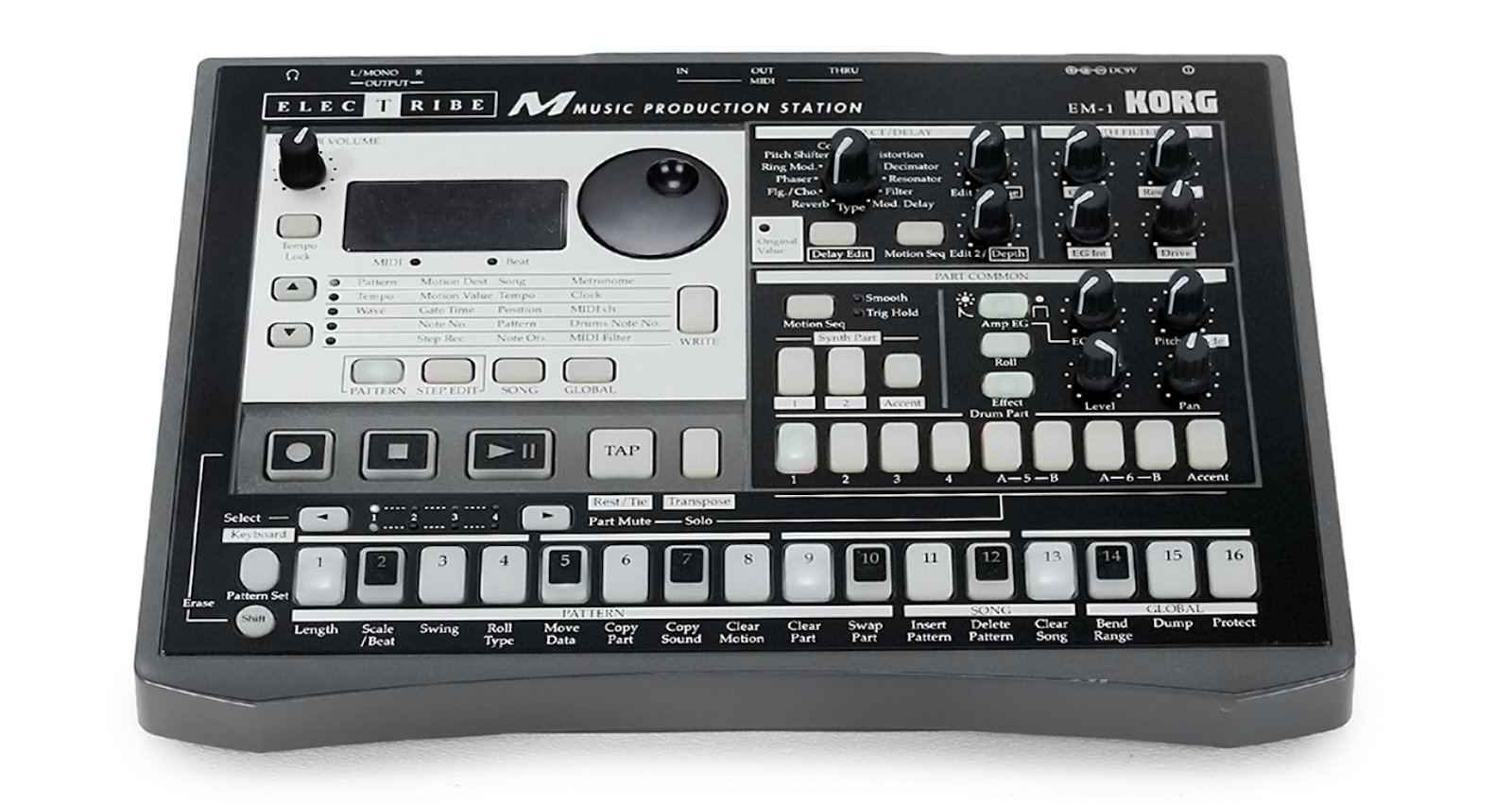
This is another model that marries synth and drum elements. It’s sort of a hybrid of the EA-1 and ER-1. Quantity is the name of the game here, with 144 drum and 50 synth sounds. It features extensive waveform editing and retains the control structure of analog synths.
The Electribe music production features continued to expand, with the sequencer now able to hold 16 full songs. With a focus on tactile, real-time control it wasn’t uncommon to see the EM1 used for live performance.
EA-1 MKII, ER-1 MKII, and ES-1 MKII
In 2003, Korg started releasing mkII models of their first three Electribe units. Fundamentally, they are almost identical. The biggest change was to the enclosure itself. Korg replaced the plastic with metal to make it more durable for live use.
They also made changes to known issues like power jacks disconnecting from the circuit board and adding more longevity to the control features that would wear out easily after a certain amount of use.
As with the EA-1 Analog Modeling Synthesizer, there aren’t drastic differences between the first and second versions of the ER-1 Rhythm Synthesizer. The MKII replaces the ring modulator effect of the first edition with a cross modulator effect on the first two tracks. A lot of users feel this effect works better for the percussion sounds the unit is renowned for. The plastic enclosure was also replaced with a metal one. Like the other mkII models, there isn’t much difference in the ES-1 MKII sampler. It has the metal enclosure replacement, and the auto-wah effect is swapped out for a second delay.
ESX-1 Music Production Sampler (2003)
×
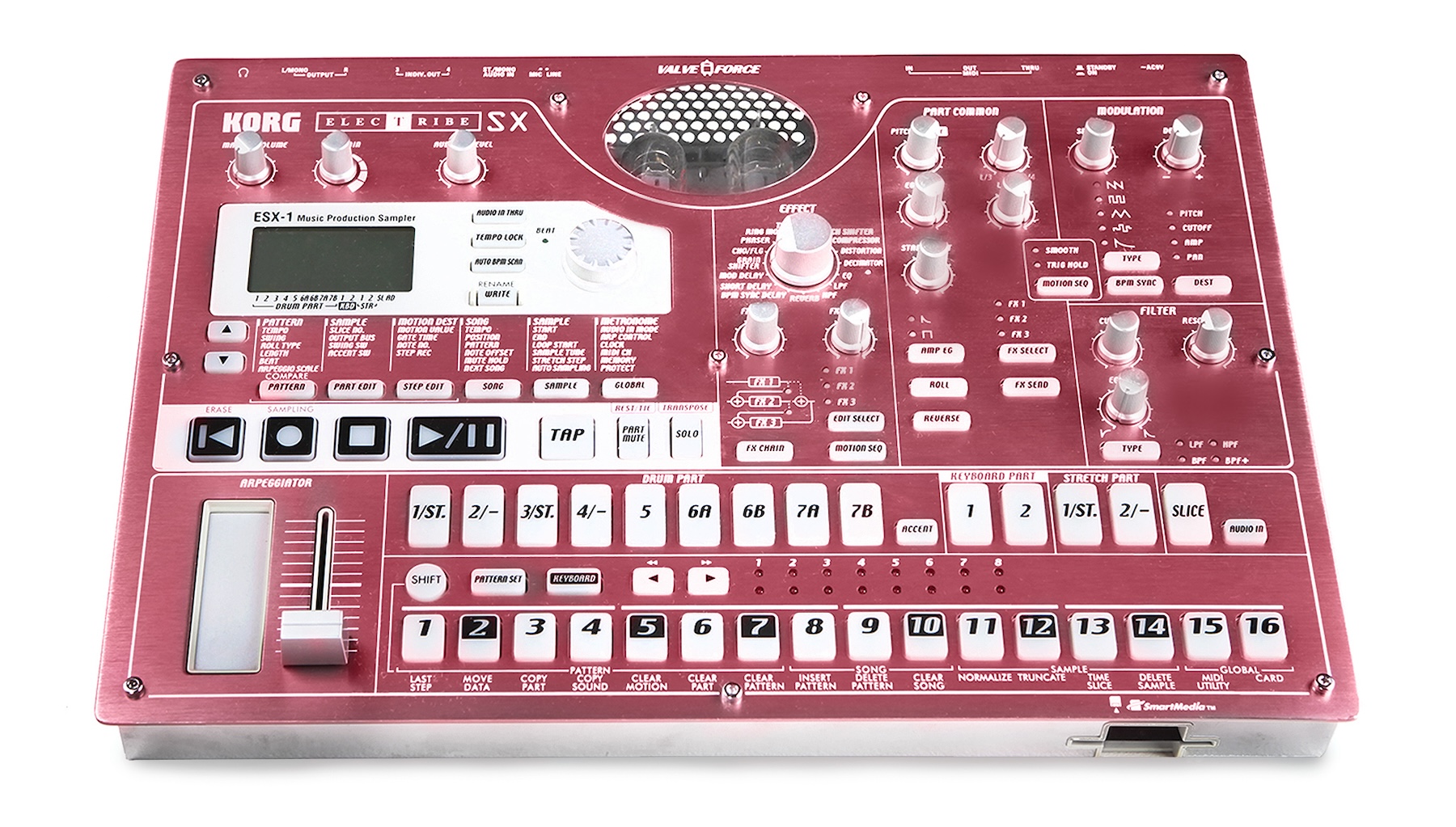
With this model the series really took a step forward. It has the durable metal housing introduced with the mkII versions of the first three Electribe models. Additional improvements include a large LCD display, expanded memory, more sounds and control features, and a vacuum tube circuit with scalable gain to add warmth and fatness to the sounds as digital audio became more popular.
The sample-based sound engine was still used, and the memory saves to a 44.1kHz sample rate. Sounds can be triggered through the device’s interface or an external MIDI controller. It introduced Stretch Parts, where the tempo of parts can be adjusted without altering pitch and Slice that divides phrases at their rhythmic peaks to create new grooves altogether.
It offered even more ways to sculpt sounds from the onboard effects, filtering, and improved sequence editor to more advanced signal routing for integrating it with other types of gear. Korg also created an ESX-SD model that offered removable SD card memory.
EMX-1 Music Production Workstation (2003)
×
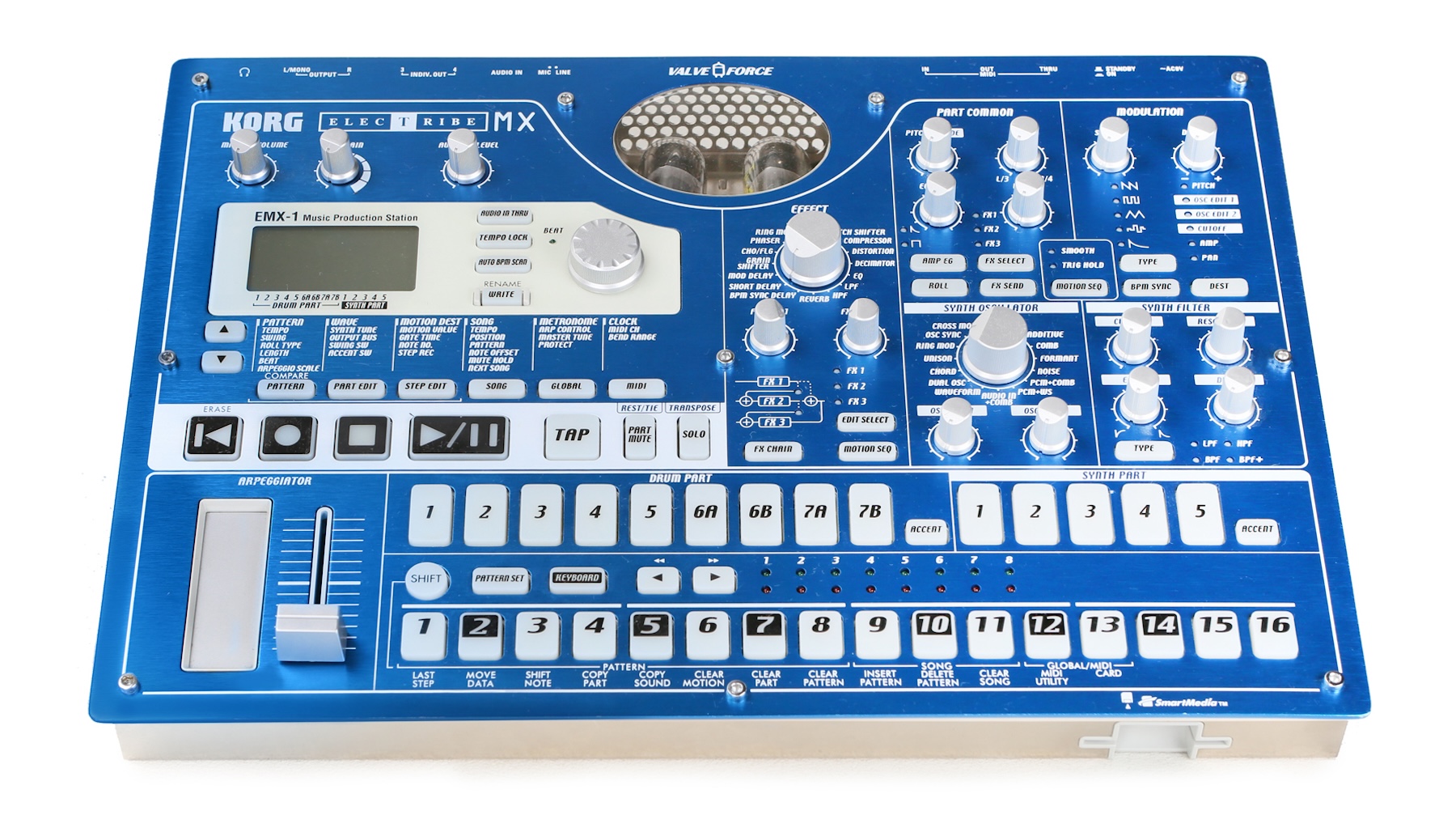
The EMX-1 was the most versatile and full-featured model yet and took the Electribe design up a few notches. It came in the same metal enclosure with a clean, robust interface layout, has the larger LCD display like the ESX-1 for easier music creating and editing, offered more memory, more real time control, and has the vacuum tubes to thicken up the sound.
Its engine runs on a multi-modeling MMT synthesis that offers multiple oscillators, note creating, and ways to shape the waveform. A built-in PCM library includes 207 drum and 76 synth sounds that sound really organic. Multiple sound shaping tools like onboard effects, filtering, and LFO and EG modulation. Like the ESX, it also came in a model that offered SD card memory.
iElectribe
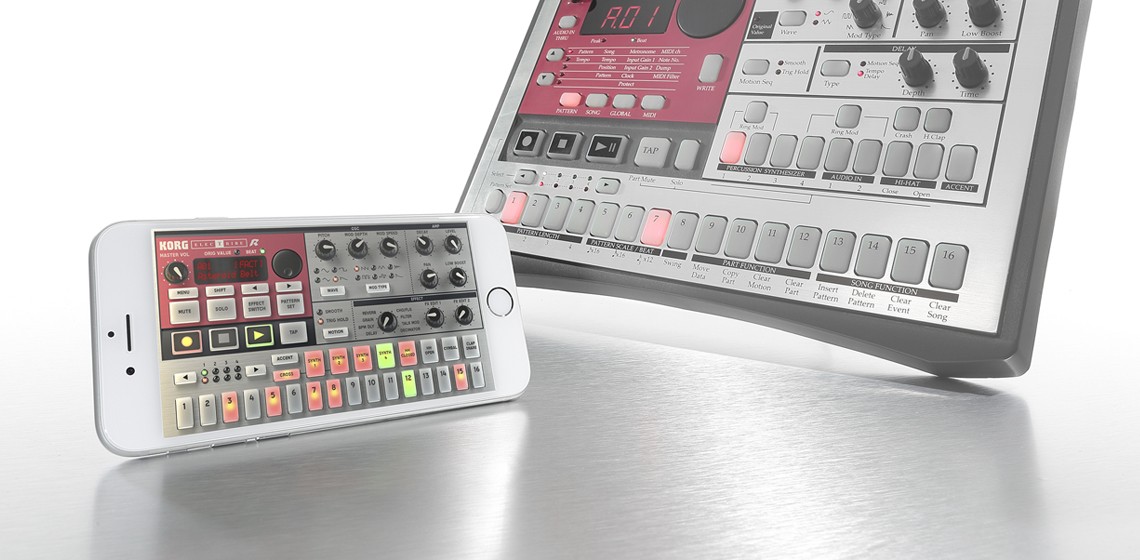
The Electribe series was first released when digital audio was really coming into its own. And with each release Korg proved they wanted to outfit every new model with modern features. Like the name implies, the iElectribe app brings the creative process of analog beat production to your iPad or iPhone and turns it into a virtual music production workstation.
×
It’s an app recreation of the Electribe R’s sound engine and sequencing capabilities. This includes the four-part PCM and percussion synthesizers. The GUI is laid out just like the hardware models.
Grooves are easy to build with the 16 step keys. Advanced Motion Sequencing lets you actively manipulate the sounds as they’re recorded to the sequencer, and onboard effects from the MX and SX models let you craft complex patterns like no Electribe model before it.
Summing it Up
By the time Korg’s Electribe A was released in 1999, the industry had spoken. All-in-one music production stations weren’t just a fad, they were here to stay. Despite the rising competition of digital audio workstations, users all over the globe found value in creating their music on these unique hardware devices.
Throughout the Electribe line Korg continued to innovate and incorporate new ideas and ways to use them while keeping the elements that drew users to them in the first place. The thick, analog sounds, the rich editing features, and the powerful internal sequencer became a favorite in the electronic music community.
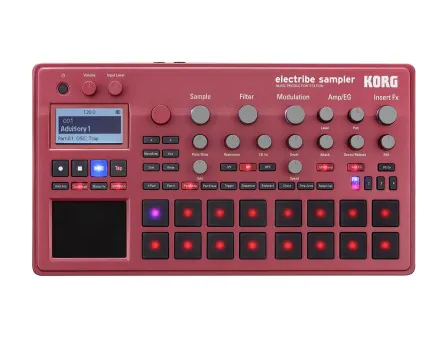
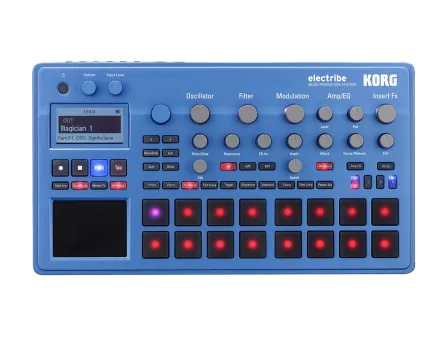
And 25 years later the appeal hasn’t faded. In 2014, Korg introduced the electribe 2 and electribe sampler 2—bringing the workflows of their iconic instruments into a new decade. And, after over a decade of continuous production, these two instruments are still available: keeping their classic groovebox workflow available, with new backlit pads and integrated X/Y control surface. You can also find the Electribe ER1 available as a VST plugin in Korg's own Korg Collection suite of software instruments.
So, even in 2026, you can indeed still party like it's 1999.




The information below is required for social login
Sign In
Create New Account